When to Replace Tires (Complete Guide for Drivers)
Your tires are one of the most important safety components of your vehicle. Yet, many drivers delay replacing them — often until it’s too late.
If you’re wondering when to replace tires, this guide will help you understand the exact signs to look for — so you can stay safe and avoid costly problems.
Why Replacing Tires on Time Matters
Driving on worn tires can lead to:
- Reduced grip on the road
- Longer braking distance
- Higher risk of accidents
- Tire blowouts
Replacing your tires at the right time is not just maintenance — it’s essential for your safety.
1. Replace Tires When Tread is Too Low
Tread depth is the most important indicator.
When tread wears down:
- Your car loses traction
- Driving in rain becomes dangerous
- Braking becomes less effective
Quick Check:
If the tread looks shallow, it’s time to replace your tires.
👉 Not sure about your tread condition?
Call now: +1 346 5549498
2. Replace Tires After 5–6 Years
Even if your tires look fine, age matters.
Over time:
- Rubber weakens
- Tires lose flexibility
- Risk of sudden failure increases
Experts recommend replacing tires every 5–6 years, especially in hot climates like Texas.
3. Replace Tires If You See Cracks
Cracks are a clear sign of aging and damage.
They indicate:
- Dry rubber
- Reduced strength
- Increased risk of failure
Don’t ignore visible cracks.
4. Replace Tires If You Notice Bulges
Bulges or blisters are serious.
They mean:
- Internal tire damage
- High risk of tire blowout
👉 Immediate replacement is required —
Call now: +1 346 5549498
5. Replace Tires If They Lose Air Frequently
If your tires keep losing air, it’s a warning sign.
Possible reasons:
- Internal damage
- Weak tire structure
- Small leaks
Instead of constant refilling, replacement may be necessary.
6. Replace Tires If Driving Feels Unstable
If your car feels:
- Shaky
- Less responsive
- Hard to control
Your tires may no longer provide proper grip.
7. Replace Tires If Fuel Efficiency Drops
Worn tires increase resistance.
This leads to:
- Higher fuel consumption
- Reduced performance
If your mileage drops, your tires could be the reason.
What Happens If You Delay Tire Replacement?
Many drivers try to extend tire life — but this can be risky.
Delaying replacement can cause:
- Tire blowouts
- Loss of control
- Expensive repairs
- Safety hazards
It’s always better to replace tires early than too late.
Texas Drivers: Be Extra Careful
In Texas:
- Heat accelerates tire wear
- Long drives increase stress
- Road conditions vary
This means tires may need replacement sooner.
👉 Not sure if your tires need replacement?
Call now: +1 346 5549498 for expert advice.
How to Extend Tire Life
To delay replacement, follow these tips:
✔ Rotate tires regularly
✔ Maintain proper tire pressure
✔ Check alignment
✔ Drive smoothly
✔ Inspect tires frequently
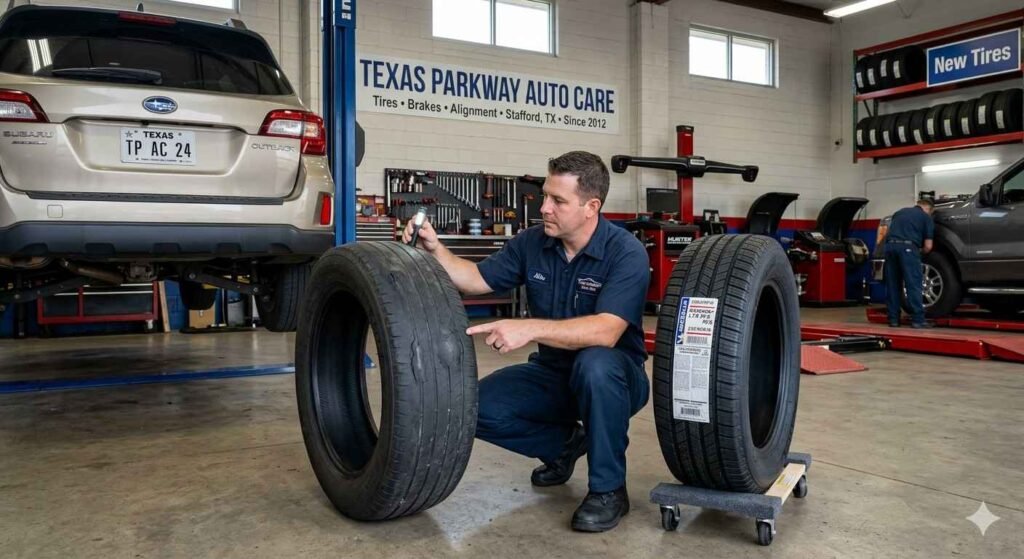
Why Professional Inspection Matters
You may not always notice tire damage yourself.
Professionals can:
- Identify hidden issues
- Recommend the right solution
- Ensure your safety
👉 Visit our experts:
Texas Parkway Auto Care
Save Money by Replacing Tires on Time
Replacing tires at the right time helps you:
✔ Avoid costly repairs
✔ Improve fuel efficiency
✔ Extend vehicle life
✔ Stay safe
Don’t Wait Until It’s Too Late
If your tires are showing any warning signs, don’t delay.
👉 Book your inspection now:
+1 346 5549498
Book Your Tire Service Today
Your safety comes first.
👉 Call now:
+1 346 5549498
Or visit our website:
👉 Texas Parkway Auto Care
Let our experts ensure your tires are safe and road-ready.
Final Thoughts
Knowing when to replace tires can save your life — and your money.
Stay proactive, check your tires regularly, and act early.
Because when it comes to safety, there’s no compromise.
![Common Brake Issues [Noise, Vibration, Safety Warning]](https://texasparkwayautocare.com/wp-content/uploads/2025/06/Common-Brake-Issues-Noise-Vibration-Safety-Warning.png)