How to Fix a Flat Tire (Step-by-Step Guide)
A flat tire can happen unexpectedly and leave you stranded on the road. Whether it’s caused by a nail, sharp debris, or wear and tear, knowing how to fix a flat tire is an essential skill for every driver. At Texas Parkway Auto Care in Stafford, TX, we provide expert tire repair and replacement services. Call us at +1 346 5549498 or email info@texasparkwayautocare.com for immediate assistance. With the right tools and knowledge, you can temporarily fix a flat tire safely before visiting a professional.
Why Flat Tires Happen
Flat tires are one of the most common automotive problems. Some common causes include:
- Punctures from nails, screws, or glass
- Sidewall damage from hitting curbs or potholes
- Wear and tear from old or poorly maintained tires
- Sudden changes in temperature causing air pressure loss
- Overloading your vehicle or improper tire alignment
Ignoring a flat tire can lead to dangerous situations like blowouts, accidents, or damage to your rims. Quick action is key to ensuring safety on the road.
Safety First: Before You Fix a Flat Tire
Before attempting to fix a flat tire, follow these safety steps:
- Move your car to a flat, stable surface away from traffic
- Turn on your hazard lights to alert other drivers
- Engage the parking brake and put your car in gear (or “park” for automatic transmissions)
- Wear gloves and, if possible, a reflective vest for visibility
- Place warning triangles behind your vehicle if on a busy road
Safety is always the first priority. Never attempt a repair in a dangerous location without taking proper precautions.
Tools You’ll Need
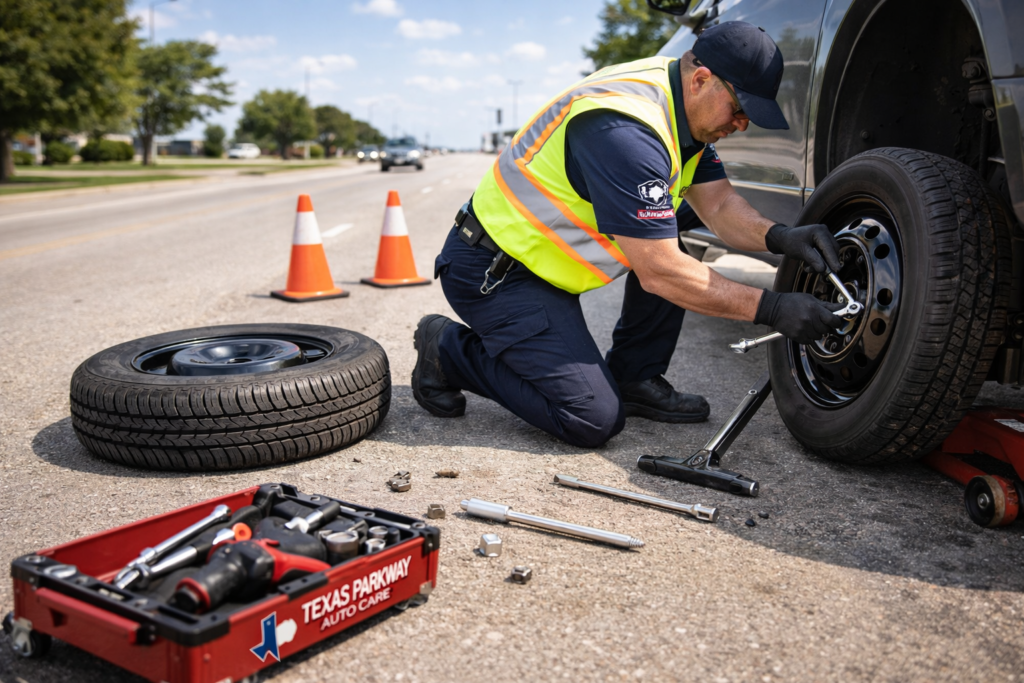
Having the right tools makes fixing a flat tire faster and safer. You will need:
- Spare tire (fully inflated)
- Car jack and jack stand
- Lug wrench or tire iron
- Tire repair kit (optional for temporary repairs)
- Wheel chocks or bricks to secure the car
- Gloves and a flashlight if fixing at night
Many cars come with these tools in the trunk, but double-check your kit regularly to ensure everything is in working order.
Step-by-Step Guide to Fix a Flat Tire
Step 1: Secure Your Vehicle
Before lifting the car, place wheel chocks behind the tires to prevent rolling. Engage the parking brake and ensure the vehicle is on a stable surface.
Step 2: Loosen the Lug Nuts
Using the lug wrench, slightly loosen the lug nuts on the flat tire while the car is still on the ground. Do not remove them completely yet. This makes it easier to unscrew them once the car is lifted.
Step 3: Lift the Car
Position the jack under the vehicle’s designated jack point (usually outlined in your car manual). Raise the car until the flat tire is off the ground. Never place any part of your body under the car while it is supported only by a jack.
Step 4: Remove the Flat Tire
Finish loosening and remove the lug nuts. Carefully take the flat tire off the wheel hub and set it aside.
Step 5: Inspect the Tire
Check the tire for punctures, nails, or sidewall damage. If the damage is repairable, you can use a tire repair kit for a temporary fix. Sidewall damage usually requires full replacement.
Step 6: Mount the Spare Tire
Align the spare tire with the wheel bolts and slide it onto the hub. Hand-tighten the lug nuts to hold the tire in place. Ensure the tire sits flush against the wheel hub.
Step 7: Lower the Car
Slowly lower the car using the jack until the spare tire touches the ground. Fully remove the jack once the car is stable.
Step 8: Tighten the Lug Nuts
Tighten the lug nuts in a star pattern to ensure even pressure. This prevents the wheel from wobbling and ensures safe driving.
Step 9: Check Tire Pressure
Use a tire pressure gauge to ensure the spare tire is inflated to the manufacturer’s recommended pressure. Under-inflated tires can cause poor handling and reduce fuel efficiency.
Tips for Maintaining Your Tires After Repair
After fixing a flat tire, proper maintenance extends the life of your tires:
- Regularly check tire pressure and inflate as needed
- Rotate tires every 5,000–7,000 miles
- Inspect tires for cracks, punctures, or embedded objects
- Keep wheels aligned to avoid uneven wear
- Drive cautiously over potholes or rough terrain
When to Call a Professional
Some flat tire situations require professional attention. Call Texas Parkway Auto Care at +1 346 5549498 or email info@texasparkwayautocare.com if you notice:
- Sidewall damage or large punctures
- Multiple punctures or severe tread damage
- Excessive vibrations after installing a spare
- If you don’t have a spare tire or proper tools
Our certified technicians in Stafford, TX, provide same day tire repair and replacement services, ensuring your vehicle is safe and road-ready.
Why Choose Texas Parkway Auto Care
At Texas Parkway Auto Care, we combine experience, speed, and affordability. Drivers in Stafford trust us for:
- Fast and professional tire repairs
- Certified technicians and advanced equipment
- Same day service for urgent needs
- Transparent pricing with no hidden fees
- Friendly and reliable customer service
Visit our homepage for more services and tire tips. Your safety on the road is our priority. Don’t risk driving on a damaged tire — visit us for expert care.
Final Thoughts
Knowing how to fix a flat tire is essential, but safety and proper tools are key. By following this step-by-step guide, you can handle minor flats and prepare for emergencies. For serious tire damage, Texas Parkway Auto Care in Stafford, TX, provides fast, reliable, and professional service to keep you safe on the road.
Drive safe, drive smart—with Texas Parkway Auto Care.
![Common Brake Issues [Noise, Vibration, Safety Warning]](https://texasparkwayautocare.com/wp-content/uploads/2025/06/Common-Brake-Issues-Noise-Vibration-Safety-Warning.png)