How to Check Tire Pressure Properly for Maximum Safety
Maintaining the correct tire pressure is one of the easiest yet most important steps you can take to ensure your vehicle’s safety and performance. Whether you are driving daily or planning a long trip, knowing how to check tire pressure properly can save you from accidents, poor fuel efficiency, and costly tire damage.
At Texas Parkway Auto Care, we help drivers stay safe with professional tire services in Stafford, TX. If you need expert assistance, call us at
+1 346 5549498
or visit
Texas Parkway Auto Care
today.
Why Proper Tire Pressure is Important
Your tires are the only contact point between your vehicle and the road. Incorrect tire pressure can affect your driving in many ways:
- Reduces fuel efficiency
- Causes uneven tire wear
- Increases risk of tire blowouts
- Reduces braking performance
- Affects vehicle handling and stability
Keeping your tires properly inflated ensures a smoother, safer, and more efficient driving experience.
When Should You Check Tire Pressure?
It is recommended to check your tire pressure at least once a month. You should also check it in the following situations:
- Before long road trips
- After sudden temperature changes
- When your tire pressure warning light turns on
- After hitting potholes or rough roads
Always check tire pressure when the tires are cold, as driving heats them up and can give inaccurate readings.
Tools You Need to Check Tire Pressure
Checking tire pressure is simple and requires only a few tools:
- Tire Pressure Gauge: Digital or manual gauge for accurate readings
- Air Compressor: To inflate tires if needed
- Owner’s Manual: To find recommended PSI levels
If you don’t have these tools, you can visit
our tire services page
for a quick and accurate pressure check.
Step-by-Step Guide to Check Tire Pressure Properly
Step 1: Find Recommended PSI
Check your vehicle’s manual or the sticker inside the driver-side door to find the correct tire pressure (PSI). This number is different for every vehicle.
Step 2: Ensure Tires Are Cold
Wait at least 3 hours after driving before checking tire pressure. Cold tires give the most accurate reading.
Step 3: Remove Valve Cap
Unscrew the valve cap from the tire and keep it in a safe place.
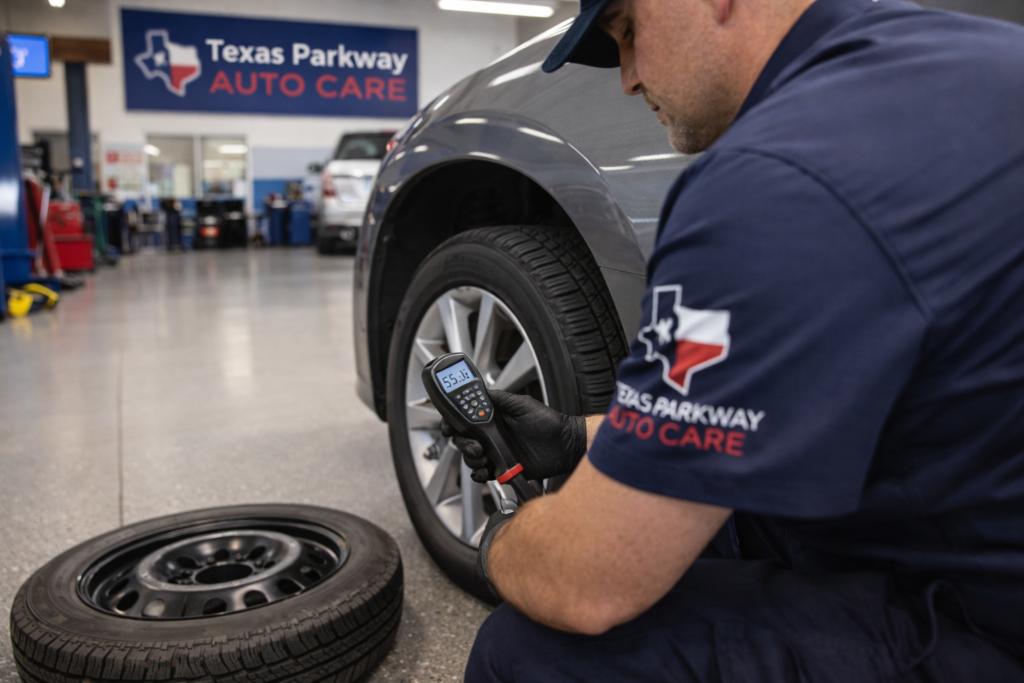
Step 4: Use Tire Pressure Gauge
Press the gauge firmly onto the valve stem. The gauge will display the current tire pressure.
Step 5: Compare with Recommended PSI
If the pressure is too low, add air. If it’s too high, release some air until it reaches the correct level.
Step 6: Adjust Tire Pressure
Use an air compressor to inflate tires. Recheck the pressure after adjusting to ensure accuracy.
Step 7: Replace Valve Cap
Once done, securely put the valve cap back on to protect the valve.
Step 8: Check All Tires
Repeat the process for all four tires and don’t forget the spare tire.
How Often Should You Check Tire Pressure?
Experts recommend checking your tire pressure at least once every month. However, if you drive frequently or travel long distances, you may need to check it more often. Regular monitoring helps detect slow leaks and prevents unexpected tire issues.
It’s also important to check tire pressure before long trips and during seasonal changes. Even a small drop in PSI can affect your vehicle’s performance and safety.
What Happens If Tire Pressure Is Too Low or Too High?
Driving with incorrect tire pressure can cause serious problems:
- Low Pressure: Causes overheating, poor fuel efficiency, and increased tire wear
- High Pressure: Reduces traction and leads to uneven wear in the center of the tire
If you’re looking for a reliable tire pressure check in Stafford TX, our experts at Texas Parkway Auto Care are here to help.
Common Tire Pressure Mistakes to Avoid
- Checking pressure right after driving
- Over-inflating tires
- Ignoring small pressure changes
- Not checking the spare tire
- Using incorrect PSI values
Avoiding these mistakes can help maintain tire performance and safety.
Seasonal Tire Pressure Tips
Tire pressure changes with temperature. Here’s what you should know:
- Winter: Cold air reduces tire pressure, so check more often
- Summer: Heat increases pressure, avoid over-inflation
- Rainy Conditions: Proper pressure improves road grip
Regular checks ensure your tires perform well in every season.
Benefits of Maintaining Proper Tire Pressure
- Improves fuel efficiency
- Extends tire lifespan
- Enhances driving safety
- Provides better comfort
- Reduces maintenance costs
Proper tire pressure is a small step that brings big benefits.
When to Visit a Professional Tire Shop
Sometimes, professional help is necessary. Visit Texas Parkway Auto Care if you notice:
- Frequent pressure loss
- Visible tire damage
- Uneven tire wear
- Vibrations while driving
Our experts provide accurate tire inspections and maintenance services. Call
+1 346 5549498
today for quick assistance.
Expert Tire Services in Stafford TX
At Texas Parkway Auto Care, we offer:
- Tire pressure checks
- Tire repair and replacement
- Wheel alignment
- Tire rotation and balancing
We are committed to keeping your vehicle safe and road-ready at all times.
Final Thoughts
Learning how to check tire pressure properly is essential for every driver. It improves safety, saves money, and ensures better performance. With regular checks and proper maintenance, you can avoid unexpected issues on the road.
Don’t take risks with your safety. Whether you need a quick tire pressure check or complete tire service, our experts are ready to help.
Call Now:
+1 346 5549498
Visit Us:
Texas Parkway Auto Care
Drive safe and confidently with Texas Parkway Auto Care.
![Common Brake Issues [Noise, Vibration, Safety Warning]](https://texasparkwayautocare.com/wp-content/uploads/2025/06/Common-Brake-Issues-Noise-Vibration-Safety-Warning.png)