When Should You Replace Car Tires? | Stafford TX Tire Replacement
Car tires are one of the most critical components for safety, handling, and fuel efficiency. Knowing when to replace car tires can prevent accidents, improve performance, and save money in the long run. At Texas Parkway Auto Care in Stafford, TX, we help drivers maintain their tires and replace them at the right time.
Need a tire inspection or replacement? Call us today at +1 346 5549498 or visit Texas Parkway Auto Care for professional service.
Why Timely Tire Replacement Matters
Worn or damaged tires can lead to decreased traction, longer braking distances, blowouts, and poor handling. Replacing tires at the right time ensures:
- Enhanced safety on highways and city roads
- Improved fuel efficiency by maintaining proper rolling resistance
- Even tire wear and extended vehicle lifespan
- Better handling and smoother driving experience
- Peace of mind while driving in all weather conditions
Signs It’s Time to Replace Tires
There are several indicators that your tires need replacement. Paying attention to these can prevent accidents and costly repairs.
1. Worn Tread Depth
One of the easiest ways to check tire wear is by measuring tread depth. Most manufacturers recommend replacing tires when tread reaches 2/32 of an inch. Low tread depth reduces grip, especially on wet or snowy roads, increasing the risk of hydroplaning. Some tires have tread wear indicators—small raised bars in the grooves. If these bars are flush with the tread, it’s time to replace the tire.
2. Tire Age
Even if tread depth appears adequate, tires degrade over time due to rubber oxidation and environmental exposure. Experts generally recommend replacing tires that are 6–10 years old, regardless of usage. To check the tire’s age, locate the DOT code on the sidewall, which includes the week and year of manufacture. Tires beyond their recommended age are prone to cracks, blowouts, and reduced performance.
3. Cracks, Cuts, or Bulges in Sidewalls
Inspect tires for sidewall cracks, cuts, or bulges. These are signs of structural damage and can lead to sudden blowouts, especially at high speeds. Any tire showing visible damage should be replaced immediately. Avoid driving on damaged tires and seek professional assessment at Texas Parkway Auto Care.
4. Uneven Tire Wear
Uneven wear can result from:
- Wheel misalignment
- Improper tire inflation
- Worn suspension components
If certain areas of the tire are worn faster than others, it may be time for replacement. Regular tire rotations and inspections help prevent uneven wear, extend tire life, and maintain a smoother ride.
5. Vibrations or Poor Handling
If you feel excessive vibrations while driving or your car handles poorly, it may indicate internal tire damage. Worn tires or internal separation can reduce stability and safety, signaling the need for replacement. Don’t ignore persistent vibrations—they are often a sign of tire imbalance or internal damage that could lead to blowouts.
How to Check Tread Depth at Home
You don’t need special equipment—just a penny or tread depth gauge:
- Insert a penny into the tire tread with Lincoln’s head facing down.
- If the top of Lincoln’s head is visible, your tread depth is below 2/32 inch and it’s time to replace the tire.
- Use a tread depth gauge for more accurate measurements. Consider replacing tires when tread is below 4/32 inch if you drive in wet conditions or snow.
Factors That Affect Tire Lifespan
Tire life varies depending on several factors:
- Driving habits: Aggressive acceleration, sharp turns, and hard braking wear tires faster.
- Road conditions: Rough, pothole-filled roads accelerate tire wear.
- Climate: Extreme heat or cold accelerates rubber degradation.
- Maintenance: Regular rotation, balancing, and proper inflation extend tire life.
- Load: Overloading your vehicle can strain tires, causing premature wear.
Types of Tires and Replacement Frequency
Different tires have different lifespans based on material, design, and intended use:
- All-season tires: Usually last 50,000–70,000 miles, providing balanced performance in varied conditions.
- Performance tires: Higher grip but shorter lifespan, typically 30,000–50,000 miles.
- Winter tires: Best replaced every 5–6 years or when tread reaches 4/32 inch for safe snow traction.
- Run-flat tires: Check manufacturer guidelines; may require replacement even if appearing intact.
Professional Tire Replacement in Stafford TX
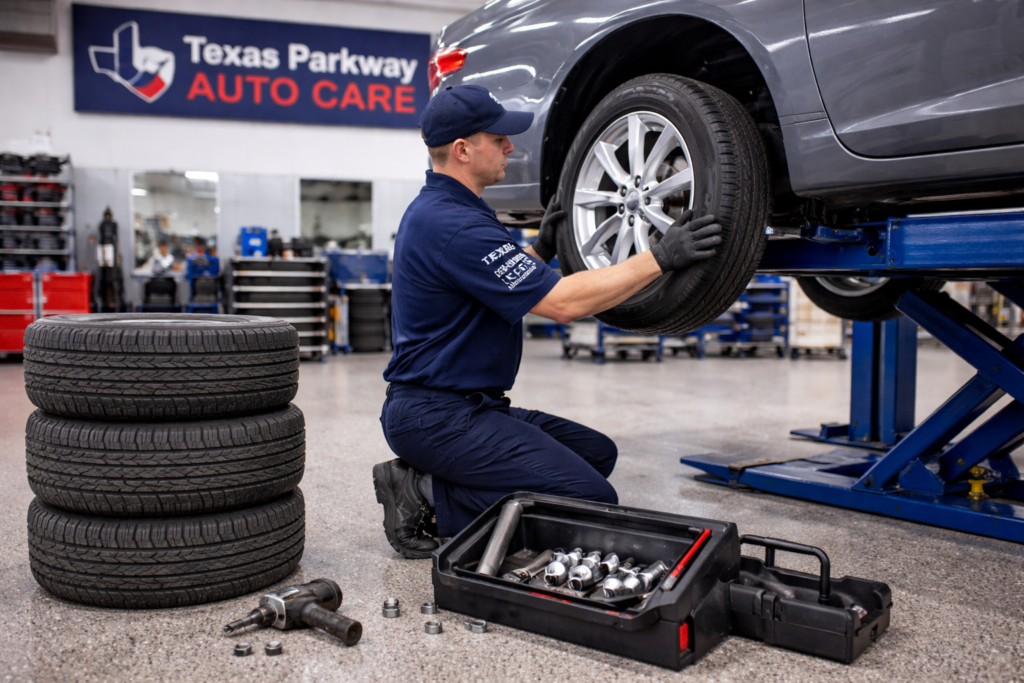
At Texas Parkway Auto Care, we provide:
- Accurate tire inspections to assess tread and sidewall condition
- Replacement with OEM-recommended tire sizes and types
- Professional balancing, alignment, and installation
- Advice on maintaining tire lifespan through rotation and proper inflation
Tips to Extend Tire Life
- Check tire pressure monthly and before long trips
- Rotate tires every 5,000–7,500 miles
- Align wheels and balance tires regularly
- Avoid potholes, curbs, and aggressive driving
- Store seasonal tires in a cool, dry place away from direct sunlight
- Inspect tires before long trips and replace if necessary
Final Thoughts
Replacing tires at the right time is crucial for safety, performance, and efficiency. By monitoring tread depth, tire age, wear patterns, and maintaining proper inflation, you can prevent accidents and costly repairs. Regular maintenance, inspections, and professional guidance from Texas Parkway Auto Care in Stafford TX will ensure your tires are safe and reliable on every drive.
Don’t wait until worn tires compromise your safety. Call +1 346 5549498 or visit Texas Parkway Auto Care for expert tire replacement and maintenance today!
![Common Brake Issues [Noise, Vibration, Safety Warning]](https://texasparkwayautocare.com/wp-content/uploads/2025/06/Common-Brake-Issues-Noise-Vibration-Safety-Warning.png)