When Should You Replace Car Tires in Texas? A Complete Guide
Driving in Texas comes with its own challenges — extreme heat, long highways, and heavy traffic. All of these factors impact your tires more than you might think.
So the big question is: when should you replace car tires in Texas?
The answer depends on several factors like mileage, wear, and age. But one thing is certain — delaying tire replacement can put your safety at serious risk.
Let’s break it down in a simple, practical way.
Why Tire Replacement is More Important in Texas
Texas heat is one of the biggest enemies of your tires.
- High temperatures soften tire rubber
- Long drives increase friction
- Road conditions cause faster wear
This means your tires may wear out sooner compared to other regions.
Ignoring this can lead to dangerous situations on the road.
General Rule: When to Replace Tires
Standard Recommendation:
- Every 25,000 to 50,000 miles
Texas Recommendation:
- Closer to 25,000–40,000 miles, depending on driving conditions
If you drive frequently or in heavy traffic, your tires may need replacement even sooner.
1. Replace Tires When Tread is Too Low
Tread depth is the most important factor.
If the tread is worn:
- Your car loses grip
- Braking distance increases
- Risk of skidding rises
Quick Check:
If the tread looks shallow — it’s time for new tires.
👉 Not sure?
Call now: +1 346 5549498 for a professional inspection.
2. Replace Tires After 5–6 Years
Even if your tires look fine, age matters.
In Texas heat:
- Rubber weakens faster
- Tires lose flexibility
- Risk of sudden failure increases
Experts recommend replacing tires every 5–6 years, regardless of usage.
3. Replace Tires If You See Cracks
Cracks are a clear sign of aging and damage.
They indicate:
- Dry rubber
- Reduced strength
- Higher risk of tire failure
Don’t wait for it to get worse.
4. Replace Tires If You Notice Bulges
A bulge means internal damage.
This is dangerous because:
- The tire can burst suddenly
- It becomes unsafe even at low speeds
👉 Immediate replacement is necessary —
Call now: +1 346 5549498
5. Replace Tires If They Lose Air Frequently
If you’re constantly refilling air, your tires may be worn out.
This could be due to:
- Internal damage
- Weak structure
- Small leaks
Instead of fixing repeatedly, replacement may be the safer option.
6. Replace Tires If Driving Feels Unstable
If your car feels:
- Shaky
- Less responsive
- Hard to control
Your tires may not have enough grip.
This is especially risky on highways.
7. Replace Tires If Fuel Efficiency Drops
Worn tires increase resistance.
This leads to:
- Higher fuel consumption
- Reduced performance
If your car is using more fuel than usual, your tires could be the reason.
What Happens If You Delay Tire Replacement?
Many drivers try to “stretch” tire life — but this can backfire.
Delaying replacement can cause:
- Tire blowouts
- Loss of vehicle control
- Expensive repairs
- Safety hazards
Replacing tires on time is always cheaper than dealing with accidents.
Texas Drivers: Stay Ahead of Tire Wear
Because of harsh conditions, Texas drivers should:
✔ Check tires regularly
✔ Replace them earlier if needed
✔ Avoid pushing worn tires too far
Prevention is always better than repair.
Why Professional Inspection Matters
You may not always notice tire damage yourself.
A professional inspection ensures:
- Accurate diagnosis
- Proper safety checks
- Expert recommendations
👉 Visit our experts:
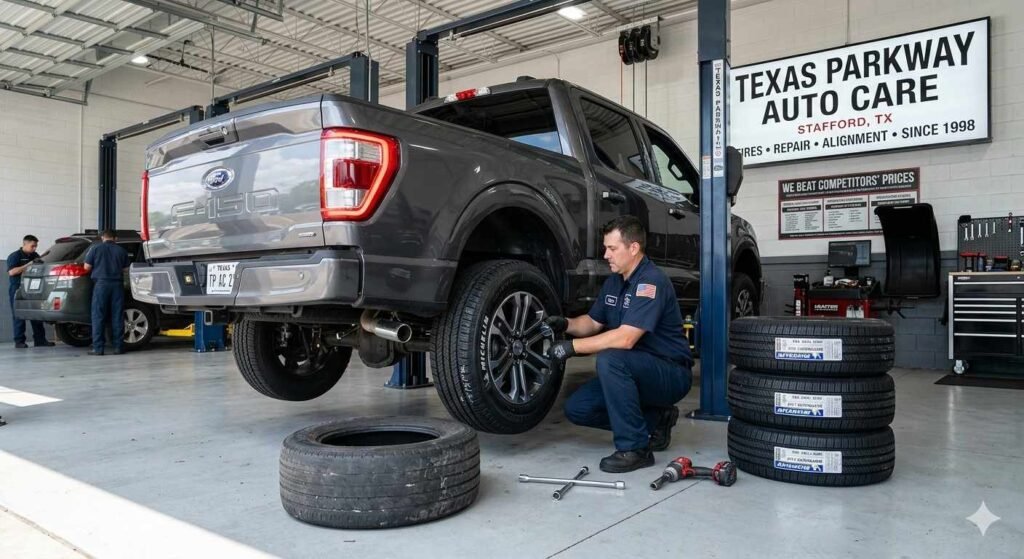
Texas Parkway Auto Care
Save Money and Drive Safely
Timely tire replacement helps you:
✔ Avoid costly repairs
✔ Improve fuel efficiency
✔ Extend vehicle life
✔ Stay safe on the road
It’s a small investment with big benefits.
Don’t Wait Until It’s Too Late
If you notice:
- Low tread
- Cracks
- Bulges
- Air loss
- Poor performance
It’s time to act.
Book Your Tire Service Today
Your safety should never be delayed.
👉 Call now:
+1 346 5549498
Or visit our website:
👉 Texas Parkway Auto Care
Let our experts help you stay safe on every drive.
Final Thoughts
Knowing when to replace your tires can prevent accidents, save money, and improve your driving experience.
In Texas, where conditions are tough, staying proactive is the key.
Take action early — and drive with confidence.
![Common Brake Issues [Noise, Vibration, Safety Warning]](https://texasparkwayautocare.com/wp-content/uploads/2025/06/Common-Brake-Issues-Noise-Vibration-Safety-Warning.png)