What Tire Size Does Your Car Need? | Tire Safety Stafford TX
Choosing the correct tire size for your vehicle is essential for safety, performance, and tire longevity. Many drivers underestimate the importance of proper sizing and end up with tires that are too large, too small, or incompatible with their vehicle’s specifications. At Texas Parkway Auto Care in Stafford, TX, we help drivers select the perfect tires for their car, SUV, or truck.
Need help finding the right tire size? Call us today at +1 346 5549498 or visit Texas Parkway Auto Care for expert guidance.
Why Tire Size Matters
The correct tire size affects everything from handling and braking to fuel efficiency and ride comfort. Using the wrong size can lead to:
- Reduced traction and vehicle control, especially in wet or icy conditions
- Incorrect speedometer and odometer readings, affecting navigation and maintenance intervals
- Poor fuel economy due to increased rolling resistance
- Increased wear on suspension, brakes, and steering components
- Potential damage to wheel wells, fenders, and other car parts
Even a small difference in tire diameter can significantly affect performance. For example, installing a larger tire on a compact car may make the speedometer read slower than actual speed, and affect acceleration and braking distances. Similarly, using smaller tires may reduce clearance and risk rubbing against suspension parts.
How to Find Your Car’s Tire Size
There are several reliable ways to determine the proper tire size for your vehicle:
- Check the Owner’s Manual: Manufacturers provide the recommended tire sizes, load ratings, and speed ratings for each model.
- Driver-Side Door Sticker: Most vehicles have a tire information sticker that shows tire size, recommended pressure, and load capacity.
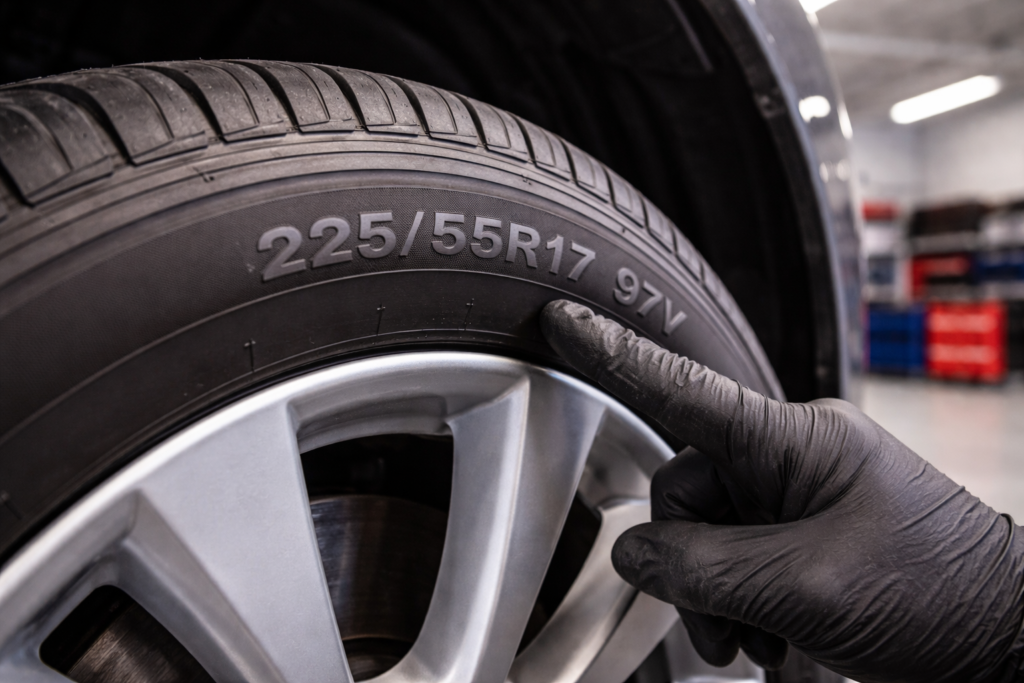
- Existing Tire Sidewall: Look at your current tires for size markings, e.g., P215/65R16 95H.
- Consult a Professional: Technicians at Texas Parkway Auto Care can confirm the correct tire size and suggest compatible models based on driving habits.
Understanding Tire Size Numbers
Tire size markings follow a standard format that indicates width, aspect ratio, wheel diameter, and load/speed ratings. For example:
P215/65R16 95H
- P: Passenger car tire
- 215: Tire width in millimeters
- 65: Aspect ratio (sidewall height as a percentage of width)
- R: Radial construction
- 16: Wheel diameter in inches
- 95H: Load index and speed rating
Each component of the size code is important to ensure proper fit, safe handling, and optimal performance. Ignoring these details can lead to uneven wear, poor traction, and potentially dangerous driving conditions.
Examples of Tire Size Differences
Consider two tires: P205/55R16 vs P225/50R16. The second tire is wider and has a smaller sidewall. This can lead to:
- Tighter handling and better cornering on dry roads
- Potentially harsher ride due to reduced sidewall flexibility
- Possible rubbing on wheel wells if clearance is insufficient
- Changes in speedometer readings and overall vehicle geometry
Common Mistakes When Choosing Tire Size
- Installing tires that are too wide or narrow for the wheel
- Ignoring load index or speed rating requirements
- Changing aspect ratio without adjusting vehicle calibration
- Choosing tires incompatible with seasonal driving needs
- Failing to account for aftermarket wheels or lift kits
Upgrading or Changing Tire Size
Some drivers want to upgrade tires for aesthetics or performance. Here’s what to consider:
- Always consult your owner’s manual or a professional technician
- Larger tires may affect fuel efficiency, suspension, and braking
- Smaller tires can reduce ground clearance and brake performance
- Speedometer and odometer accuracy must be maintained
- Consider tire type (all-season, performance, or off-road) along with size
Impact on Fuel Efficiency and Safety
The right tire size can improve fuel economy by reducing rolling resistance. On the other hand, oversized tires increase engine load, which reduces miles per gallon. Additionally, correct sizing ensures proper braking distances and stable handling, which are critical for highway driving and emergency maneuvers.
Tips for Maintaining the Right Tire Size
- Rotate tires every 5,000–7,500 miles
- Maintain recommended tire pressure
- Check tread depth regularly and replace worn tires promptly
- Inspect tires for damage, uneven wear, or sidewall cracks
- Balance and align tires as needed to prevent uneven wear
- Follow manufacturer recommendations for seasonal tire changes
Professional Tire Services in Stafford TX
At Texas Parkway Auto Care, we provide:
- Expert tire size consultation and recommendations
- Professional tire installation, balancing, and rotation
- Wheel alignment and suspension inspection
- Comprehensive tire safety checks to ensure road-ready performance
Call +1 346 5549498 today or visit Texas Parkway Auto Care to schedule your appointment.
Final Thoughts
Choosing the correct tire size is crucial for safety, vehicle performance, and cost savings. Proper tire sizing affects traction, braking, handling, and fuel efficiency. Regular checks, correct sizing, and professional maintenance help your vehicle perform optimally while reducing the risk of accidents or premature tire wear.
Ensure your car has the correct tires today with Texas Parkway Auto Care in Stafford TX. Call +1 346 5549498 for expert tire services.
![Common Brake Issues [Noise, Vibration, Safety Warning]](https://texasparkwayautocare.com/wp-content/uploads/2025/06/Common-Brake-Issues-Noise-Vibration-Safety-Warning.png)