Is Tire Repair Safe? What Experts Say
Getting a flat tire is one of the most common problems drivers experience. When it happens, many people ask the same question: Is tire repair safe, or should the tire be replaced completely?
The answer depends on several important factors such as the location of the damage, size of the puncture, and the overall condition of the tire. While some tire repairs are perfectly safe when done correctly, others can put you at risk if the damage is too severe.
At Texas Parkway Auto Care, our tire specialists help drivers determine whether their tire can be safely repaired or if replacement is the better option.
If you need immediate tire assistance, you can call us directly at +1 (346) 554-9498 or visit Texas Parkway Auto Care to schedule a professional inspection.
When Tire Repair Is Safe
According to automotive experts, tire repair can be completely safe if certain conditions are met.
1. The Damage Is Small
Most tire repairs are safe when the puncture is small, usually less than 1/4 inch in diameter. These small punctures are commonly caused by nails or screws on the road.
When repaired properly using professional techniques, these tires can often continue to perform safely for the rest of their lifespan.
However, it is always important to have the tire inspected by trained technicians.
At Texas Parkway Auto Care, our team carefully checks tire damage before recommending a repair. If you’re unsure about your tire condition, call +1 (346) 554-9498 for expert advice.
2. The Puncture Is in the Tread Area
Tire repairs are typically safe only when the puncture is located in the tread area, which is the center part of the tire that touches the road.
Damage in this area can often be repaired using professional patch or plug methods.
However, if the puncture is located in the sidewall or shoulder of the tire, repair is usually not safe because those areas experience more pressure and flex while driving.
In these cases, replacement is usually recommended for safety.
You can always visit Texas Parkway Auto Care for a professional tire inspection.
3. The Tire Structure Is Still Strong
Even if the puncture is small, the tire must still have a strong internal structure.
If the tire has experienced:
-
Internal damage
-
Severe wear
-
Sidewall cracks
-
Previous improper repairs
then repairing it may not be safe.
Professional technicians can detect these issues during inspection.
Our experts at Texas Parkway Auto Care use professional tools and experience to ensure every repair meets safety standards.
When Tire Repair Is NOT Safe
While many tire punctures can be repaired, there are situations where repair is not recommended.
1. Sidewall Damage
The sidewall is one of the most important structural areas of the tire.
If the sidewall is punctured, cut, or damaged, the tire should usually be replaced rather than repaired.
Sidewall repairs are risky because the sidewall flexes constantly while driving, which increases the chance of tire failure.
If you notice sidewall damage, it’s best to visit Texas Parkway Auto Care immediately for professional evaluation.
2. Large Punctures or Multiple Holes
Tires with large punctures or multiple holes may not be safe to repair.
If the damage is too large, a patch may not hold properly and the tire could fail while driving.
In these situations, experts recommend replacing the tire instead of attempting a risky repair.
If you’re not sure whether your tire can be repaired safely, our technicians are ready to help. Call +1 (346) 554-9498 for professional guidance.
3. Driving on a Flat Tire
Sometimes drivers continue driving even after the tire loses air pressure.
Unfortunately, driving on a flat tire can cause internal structural damage that cannot always be seen from the outside.
Even if the puncture appears small, the tire may no longer be safe.
That’s why it’s important to have the tire inspected by professionals before attempting any repair.
You can visit Texas Parkway Auto Care for a complete tire safety check.
Why Professional Tire Repair Matters
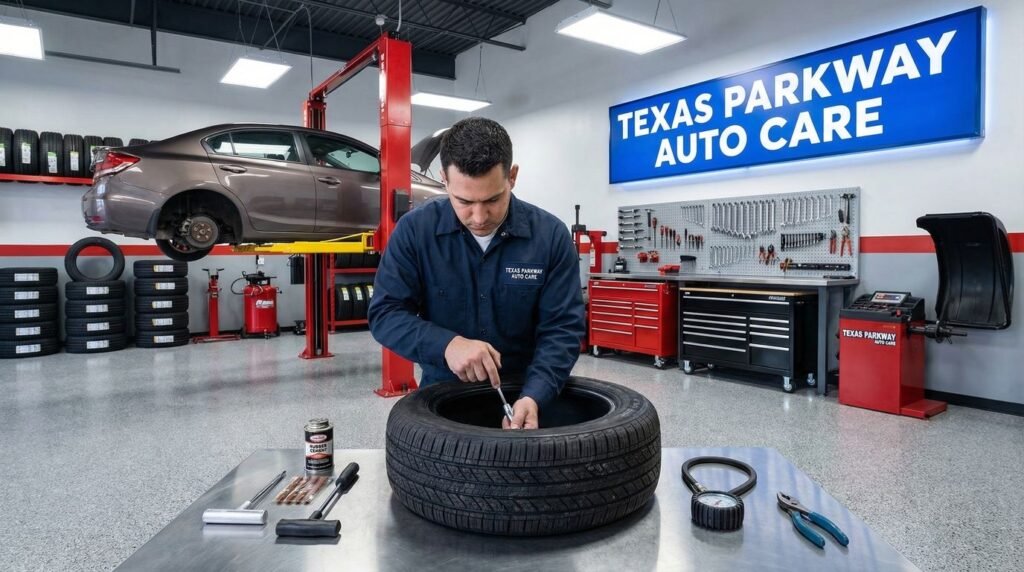
Some drivers attempt DIY tire repair kits, but these temporary fixes often do not provide the same safety as professional repairs.
Professional tire repair includes:
-
Removing the tire from the wheel
-
Inspecting the internal structure
-
Installing a proper patch-plug combination
-
Ensuring airtight sealing
-
Checking tire balance and pressure
These steps ensure that the repair meets industry safety standards.
At Texas Parkway Auto Care, our trained technicians follow professional repair procedures to ensure your tire is safe and reliable.
If you experience a flat tire, contact us at +1 (346) 554-9498 for quick assistance.
Signs Your Tire Should Be Replaced Instead
Sometimes tire replacement is the safer option. Experts recommend replacing the tire if you notice:
-
Large punctures or cuts
-
Sidewall damage
-
Extremely worn tread
-
Bulges or bubbles in the tire
-
Repeated air pressure loss
Ignoring these warning signs can increase the risk of accidents and unexpected breakdowns.
If you’re unsure whether your tire needs repair or replacement, the professionals at Texas Parkway Auto Care can help you make the right decision.
Visit Texas Parkway Auto Care to schedule your inspection.
Final Thoughts
Tire repair can be safe and effective when done correctly, but it depends on the type and location of the damage. Small punctures in the tread area are often repairable, while sidewall damage or severe tire wear usually requires replacement.
The most important step is getting your tire inspected by experienced professionals who can determine the safest option for your vehicle.
At Texas Parkway Auto Care, we are committed to keeping drivers safe with reliable tire inspections, professional repairs, and high-quality replacements.
If you’re dealing with a flat tire or suspect tire damage, contact us today.
Call +1 (346) 554-9498 or visit Texas Parkway Auto Care to schedule your tire service.
Your safety on the road starts with properly maintained tires.
![Common Brake Issues [Noise, Vibration, Safety Warning]](https://texasparkwayautocare.com/wp-content/uploads/2025/06/Common-Brake-Issues-Noise-Vibration-Safety-Warning.png)